How Fashion Photographers Collaborate With Designers and Creative Teams
The final image in a luxury fashion campaign often projects a singular, seamless illusion. It feels as though a solitary genius with a camera simply walked into a room, found the perfect angle, and captured a fleeting moment of aesthetic perfection. In reality, the creation of a high-level fashion photograph is far from a solo endeavor. It is a highly engineered, intensely collaborative operation that requires the synchronized integration of multiple creative disciplines.
A successful fashion photographer operates less like a lone painter and much more like a symphony conductor. They must orchestrate the distinct talents of designers, art directors, stylists, and technicians to execute a unified visual thesis. Understanding how these moving parts interact behind the scenes reveals the true complexity of an industry built on manufacturing glamour.
Aligning With the Designer’s Vision
The foundation of any fashion editorial or commercial campaign begins long before the lighting equipment is unboxed. It starts with the fashion designer. For a designer, a seasonal collection is the culmination of months of intensive labor, historical research, and emotional investment. The garments are three-dimensional, tactile expressions of a specific narrative.
The photographer’s fundamental responsibility is to translate that physical, moving art into a static, two-dimensional medium without losing its core identity. This translation process requires a profound level of empathy and communication. Before a concept is even drafted, the photographer must sit down with the designer to understand the nomenclature of the collection. They need to know the historical references, the architectural inspirations, and the intended mood. Is the collection meant to evoke the gritty rebellion of 1970s London punk, or the soft, ethereal romance of a Victorian mourning dress? The photographer must internalize this narrative and build a lighting and framing strategy that amplifies the designer’s original intent.
Translating Fabric to Film
Different fabrics require entirely different photographic approaches. A designer working with heavy, structured tweeds or stiff brocades needs the photographer to utilize sharp, directional lighting to carve out the textures and showcase the tailoring. Conversely, if a designer has spent hundreds of hours draping delicate, sheer silks, blasting the garment with harsh light will flatten the fabric and ruin the design. In this scenario, the photographer must collaborate with the designer to ensure the lighting is soft, diffused, and capable of capturing the subtle, translucent movement of the garment.
The Pre-Production Ecosystem and Art Direction
While the designer provides the raw material, the art director provides the commercial framework. In the hierarchy of a major fashion campaign, the art director serves as the vital bridge between the brand’s marketing executives and the photographer’s creative impulses.
During the pre-production phase, the art director and photographer engage in an intensive exchange of mood boards and visual references. The art director’s job is to protect the brand’s identity, ensuring that the imagery will appeal to the target demographic and fit perfectly within the layout of a magazine spread or a billboard. The photographer’s job is to push the creative boundaries and elevate the concept beyond a standard product shot. This relationship is a delicate dance of give-and-take. The strongest campaigns emerge when there is mutual trust, allowing the art director to maintain commercial viability while the photographer injects their unique stylistic signature into the frames.
Location Scouting and Set Design
Together, the photographer and the creative team must decide where this visual narrative will unfold. If the concept demands a tangible environment, they collaborate with a set designer to build a bespoke world inside a studio. Every prop, backdrop color, and piece of furniture is meticulously chosen to complement the designer’s clothing. If the shoot is on location, the photographer works with location scouts to find environments that offer the correct architectural geometry and ambient lighting to support the overarching creative brief.
The Synergy of Wardrobe and Styling
On the actual day of the shoot, the wardrobe stylist is arguably the photographer’s closest ally. It is a common misconception that a stylist simply curates pretty clothes and hands them to a model. In the realm of high fashion photography, styling is a deeply technical and heavily engineered discipline.
A runway sample rarely fits a model perfectly straight off the rack. The stylist spends the entire shoot standing just outside the camera’s frame, using an arsenal of heavy-duty binder clips, double-sided tape, and strategically placed pins to sculpt the garment to the model’s body. The photographer relies entirely on the stylist to manipulate the clothing specifically for the camera lens. A dress that looks beautiful in person might look completely shapeless when compressed into a two-dimensional photograph. The photographer must constantly communicate with the stylist, directing them to pull a fabric tighter, adjust a collar, or pin a hemline so that the garment catches the studio strobes in the most flattering way possible.
Orchestrating the Glamour with Hair and Makeup
The relationship between the photographer and the Hair and Makeup Artists (HMUA) is driven by the physics of light. Photographic lighting—especially high-wattage studio strobes—behaves very differently than natural daylight or the vanity lights in a makeup trailer. Harsh flashes can easily wash out subtle skin tones, flatten bone structure, and neutralize lip colors.
To combat this, the photographer and the HMUA must maintain a continuous dialogue. Before the makeup artist finalizes a look, the photographer will often take test shots of the model under the exact lighting conditions built on set. They review these digital files together on a tethered monitor. The photographer might notice that a specific lighting modifier is creating an unwanted shadow under the model’s eyes, prompting the makeup artist to adjust the concealer. If the photographer is using colored gels on their lights, the makeup artist must intentionally alter the color palette of the eyeshadow and blush to ensure the hues do not clash under the colored flashes. It is a symbiotic relationship where the makeup informs the lighting, and the lighting dictates the makeup.
Executing the Vision with the Technical Crew
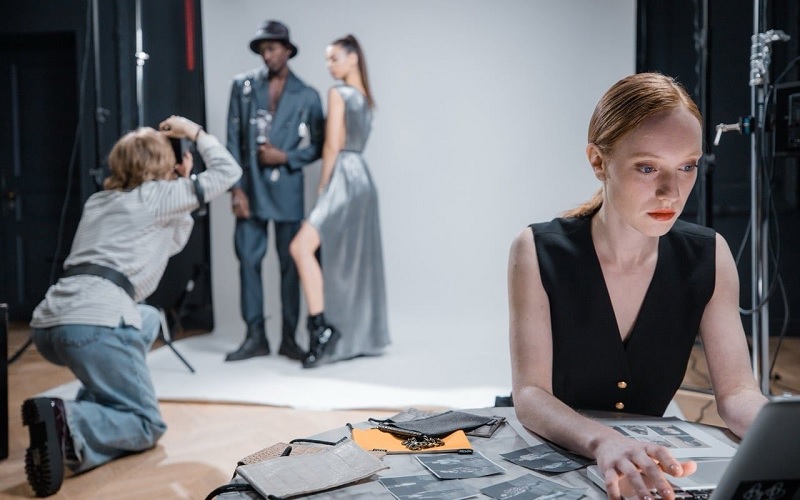
Behind the camera, the photographer is managing a dedicated technical crew responsible for manipulating the physical environment. The gaffers and lighting technicians execute the photographer’s lighting schematics, moving heavy modifiers, adjusting light stands, and managing electrical output. A great fashion photographer communicates their vision clearly to the lighting crew, trusting these technicians to fine-tune the ambient exposure while the photographer focuses on directing the model’s posing and expression.
Simultaneously, the digital technician (DigiTech) acts as the quality control center. Because modern fashion photography is almost entirely tethered, every image appears instantly on a calibrated workstation. The DigiTech works alongside the photographer, checking critical focus, applying live color grades, and ensuring the digital files are safely backed up. This allows the art director, the designer, and the photographer to evaluate the collaboration in real-time, making micro-adjustments to the styling, lighting, and posing on the fly.
The Final Layer: Post-Production and Retouching
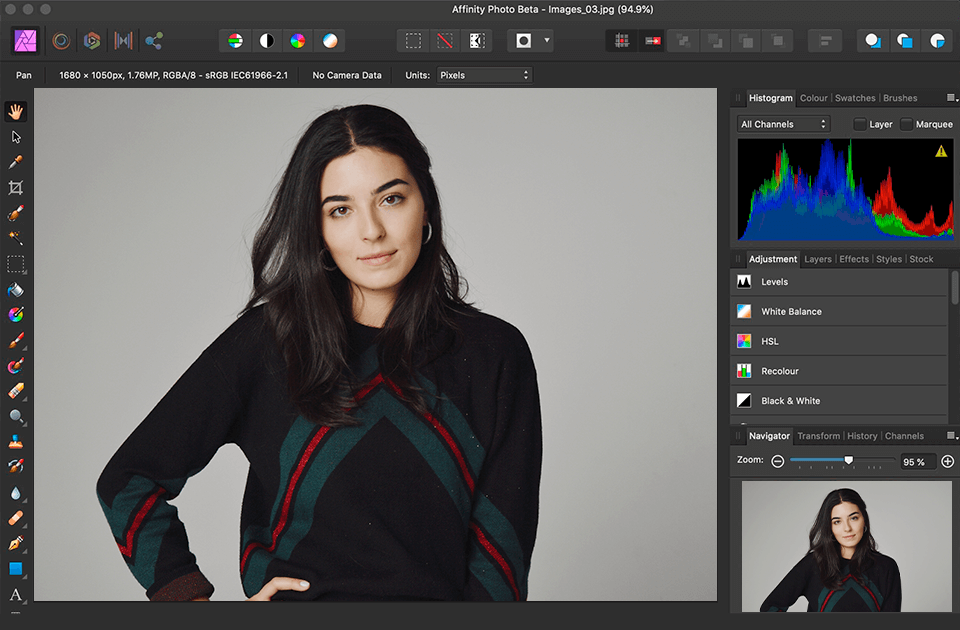
The collaboration does not end when the studio lights are powered down. The post-production phase is the final, critical step in the image-making process. The photographer works closely with specialized retouchers to polish the raw files into the final polished advertisements.
This phase is heavily scrutinized by the designer and the art director. While the photographer might want to push the color grading to create a moody, cinematic atmosphere, the designer will demand absolute color accuracy for the garments. If a designer created a dress in a specific shade of cerulean blue, the retoucher cannot allow the photographer’s color grade to shift that dress into a teal or navy. The art of high-end retouching is balancing the photographer’s atmospheric aesthetic with the brand’s demand for precise product representation.
Creating an iconic fashion image is an exercise in managing chaos, merging distinct artistic egos, and aligning diverse technical skills toward a single objective. When a photographer successfully navigates this intricate web of collaboration, the result is a photograph that transcends simple marketing. It becomes a piece of visual culture, born not from a single mind, but from the synchronized brilliance of an entire creative team.