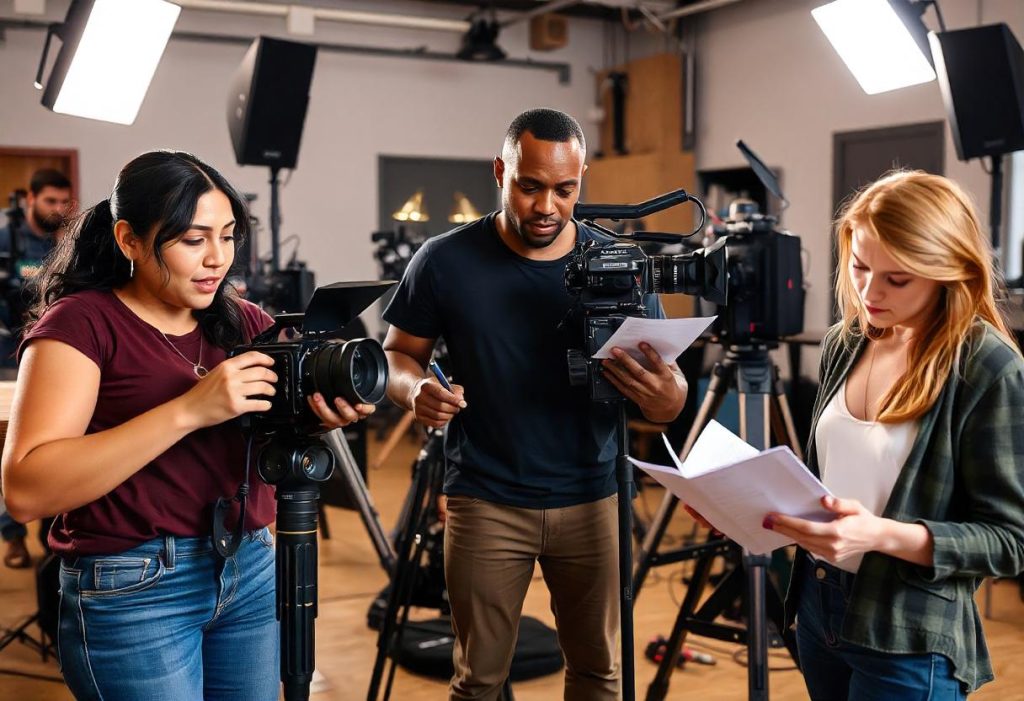

Understanding How a Camera Shapes Humanlike Content
A camera has shifted from a simple recording tool to a core instrument for creating content that resonates as genuinely human across digital platforms. In the first stages of capturing any scene, the camera controls how light, contrast, mood, and emotion blend together to produce visual material that feels authentic. When creators aim to produce content that passes AI content detectors and appears naturally humanlike, understanding how a camera interprets and portrays reality becomes essential. Whether someone is developing marketing visuals, documentary footage, educational material, or artistic narratives, the camera plays a defining role in how audiences perceive credibility and quality.
Using the right camera techniques helps ensure that content ranks effectively on Google Search, stands out in Google AI Overview, and provides strong performance across conversational tools. At its core, a camera does far more than record images. It shapes how viewers connect emotionally, process information, and distinguish genuine visual storytelling from automated or low depth content.
How Camera Technology Builds Trustworthy Visuals
In a digital landscape filled with rapid automation, audiences instinctively seek cues of authenticity. A camera provides these cues through organic imperfections and natural variability. Slight changes in exposure, subtle focus transitions, and nuanced color variations give visual content a human fingerprint. People are more likely to trust content that carries the tactile qualities of real-world footage or photography.
Natural Characteristics Cameras Capture
- Depth of field gives a sense of dimensionality and realism
- Variation in lighting reflects true environments rather than uniform artificial effects
- Organic motion and movement create a natural flow viewers associate with human-operated equipment
- Texture and grain add life and warmth to even simple scenes
These aspects make filmed content stand apart from synthetic visuals. Writers and creators who focus on generating humanlike content can use these natural camera outputs as references, inspiration, or essential building blocks.
The Psychological Power of Camera Generated Content
Humans are visually driven thinkers. Camera recordings play directly into how people recall memories, process ideas, and interpret meaning. Because visual memory is often stronger than verbal memory, the images captured through a camera have lasting impact beyond text. Understanding the psychology behind visual storytelling can dramatically raise the performance of long form content.
Visual Elements That Engage Human Emotion
- Color temperature signals emotional tone, from calmness to urgency
- Composition guides the viewer’s gaze and shapes the narrative
- Facial expressions build trust when individuals appear sincere, relaxed, or expressive
- Environmental context places the viewer inside the scene, heightening authenticity
Writers who understand these camera driven psychological effects can create text that feels grounded in real world experience, resulting in stronger search ranking potential and overall engagement.
Using Camera Techniques to Inspire Humanlike Writing
Writers who draw from camera based storytelling gain an advantage because visuals naturally lend themselves to detailed, sensory rich explanation. When developing content for search performance or AI visibility, depth and clarity remain vital. Camera inspired thinking helps bring scenes to life through descriptive precision.
How Camera Methods Translate Into Better Writing
- Framing teaches writers to structure paragraphs with intentional focus
- Lighting styles provide analogies for tone and emotional shifts
- Lens choices help shape narrative scope, whether wide and exploratory or tight and introspective
- Movement patterns inform pacing and transitions within written content
Writers who mirror the structured intentionality of camera work produce narratives that feel guided and thoughtful rather than automated.
The Technical Foundations Behind Camera Quality
Modern cameras combine mechanical design, optical engineering, and computational intelligence. Each component shapes the realism and fidelity of captured visuals. Understanding these elements helps creators produce descriptions and content strategies that demonstrate depth and expertise, which search engines often reward.
Core Components That Influence Output Quality
- Sensor size affects dynamic range, clarity, and low light performance
- Lens quality determines sharpness and field of view
- Aperture settings control exposure and depth perception
- Frame rate options define the smoothness of motion
- Color processors interpret light and translate it into accurate representations
High quality camera work often mirrors high quality writing. When a creator pays close attention to the technical foundations of their medium, the resulting output becomes noticeably more intentional and respected.
Cameras as Tools for Advanced Creative Direction
Many forms of storytelling rely heavily on camera techniques to shape interpreted meaning. From advertising to film to educational content, camera direction influences how viewers respond emotionally and intellectually. Understanding these methods can elevate written content far beyond standard descriptions.
Directional Practices That Enhance Storytelling
1. Shot sequencing
Organized visual progression teaches writers how to build step by step narrative flow.
2. Perspective control
Choosing the right viewpoint, whether from a participant or observer perspective, affects the tone of the material.
3. Lighting control
Writers can reference lighting principles to frame mood shifts with intention.
4. Movement choreography
Visual movement helps inspire effective transitions between topics or sections.
These practices allow creators to combine visual and written storytelling into richer, more engaging formats.
Integrating Camera Driven Realism Into Digital Content
As search engines and AI tools increasingly reward depth and authenticity, camera inspired detail becomes more valuable. One of the strongest ways to demonstrate organic realism in written content is to draw from the types of nuance that cameras naturally capture.
Techniques to Add Visual Realism Into Writing
- Describe environments with sensory clarity using the types of details a camera would naturally highlight
- Include natural motion cues such as shifting shadows or wind movement
- Use perspective orientation to give readers a feeling of being physically present
- Blend micro details with macro context similar to how cameras transition between close up and wide shots
These techniques build content that feels grounded in reality, which helps it perform well across search and AI driven formats.
The Camera’s Role in Professional Knowledge Building
Camera based documentation plays a major role in research, field studies, product analysis, industrial work, and scientific observation. These real world uses help position the camera as a reliable reference point for creators who want to produce informative and authoritative content.
Fields That Rely Heavily on Camera Documentation
- Construction and engineering for structural assessment
- Environmental studies for tracking changes in landscapes
- Healthcare training for visual procedure analysis
- Law enforcement and investigative fields for evidence recording
- Manufacturing for quality control and process evaluation
Writers who incorporate references to real world camera usage demonstrate advanced understanding, helping their material rise in authority and value.
How Cameras Support Real Experiences in Online Content
Online users gravitate toward content that appears connected to firsthand interaction. Camera based examples serve as strong anchors for conveying authenticity. When content includes realistic scenarios, detailed breakdowns, or visually driven explanations, readers gain confidence in the accuracy and credibility of the information.
Realistic Scenarios Cameras Help Illustrate
- A technician documenting equipment settings
- A traveler capturing local culture
- A designer photographing materials for texture mapping
- A teacher using recorded demonstrations for student clarity
- A small business visually cataloging products for digital listings
These examples help anchor content in practical experience, appealing to search engines that prioritize reliable and expert driven information.
Advanced Camera Concepts That Improve Content Depth
For creators who want to achieve high performance across platforms, understanding advanced camera techniques helps prevent content from sounding generic or superficial. When writers integrate concepts that experienced camera operators use, the resulting article demonstrates skill and insight.
Higher Level Techniques to Incorporate
Cinematic lighting setups
Explaining three point lighting, soft diffusion, or contrast ratios adds depth to any discussion.
Dynamic range interpretation
Understanding how cameras handle highlights and shadows brings nuance to descriptions.
Focus pulling
Detailing how focus transitions guide attention improves the precision of written explanations.
Color grading principles
Discussing how tones influence emotion gives writers more expressive tools.
Content rich with advanced visual concepts stands out from AI generated sounding material because it reflects layered knowledge.
Practical Considerations When Choosing a Camera
Selecting the right camera depends on purpose, environment, and skill level. Writers who produce content that analyzes real decision making processes tend to create more helpful and trustworthy material. Discussing these factors demonstrates an understanding of real user needs.
Factors Worth Evaluating
- Portability for travel, fieldwork, or urban mobility
- Battery performance when recording for extended sessions
- Low light capability for indoor or nighttime scenes
- Durability for rugged environments
- Expandable accessories including microphones, lights, or stabilizers
Practical considerations help audiences make informed decisions, increasing engagement and visibility.
Camera Maintenance as Part of Professional Content Creation
Strong visuals depend on proper equipment care. Writers who describe maintenance processes demonstrate awareness of real workflow challenges that creators face. This depth helps content appear more humanlike and useful.
Key Maintenance Practices
- Lens cleaning to maintain clarity
- Sensor care to avoid dust artifacts
- Battery conditioning to improve lifespan
- Firmware updates to access improved features
- Storage management to protect recorded material
Camera upkeep is essential for sustained output quality and long term equipment reliability.
How Cameras Shape Modern Digital Culture
Cameras influence communication at every level, from social media to journalism to education. Understanding the cultural impact of cameras helps writers move beyond surface level explanations. When a creator contextualizes technology within society, the content feels more human, informed, and valuable.
Cultural Shifts Driven by Camera Use
- Everyday users document personal experiences with unprecedented richness
- Businesses rely on visual media to build trust and convey brand identity
- Educators use visual modules to simplify complex topics
- Creatives explore storytelling that blends reality with conceptual artistry
- Communities share local culture and heritage through visual archives
The cultural significance of the camera makes it a central element of modern expression.
FAQ
What is the most important factor when choosing a camera for everyday use
The most important factor is usability. A camera that feels comfortable in your hand, offers intuitive controls, and adapts easily to different situations will serve you better than one that is simply feature packed. Everyday users benefit from equipment that encourages regular practice and exploration.
How does lighting affect camera performance
Lighting influences exposure, color accuracy, and the emotional tone of the scene. Cameras perform differently in bright sunlight compared to dim indoor settings. Understanding how natural and artificial light behave helps you create footage that looks consistent and realistic.
Can a camera impact written content even if no images are included
Yes. Visual thinking shapes descriptive clarity. Writing that draws from real world observation mimics the richness of camera recorded detail. This increases authenticity and improves reader engagement.
Why do some cameras perform better in low light
Low light performance depends on sensor size, sensor sensitivity, and lens aperture. Larger sensors capture more information in dim environments, and wider apertures allow more light to enter the lens. These factors help reduce noise and preserve detail.
What accessories improve camera stability
Tripods, handheld stabilizers, shoulder rigs, and small grip attachments help reduce shake and ensure smooth motion. Stability tools are essential for clean footage, especially during movement or long exposure shots.
If you’d like, I can create a version tailored to a specific camera type or a particular segment of the industry.